
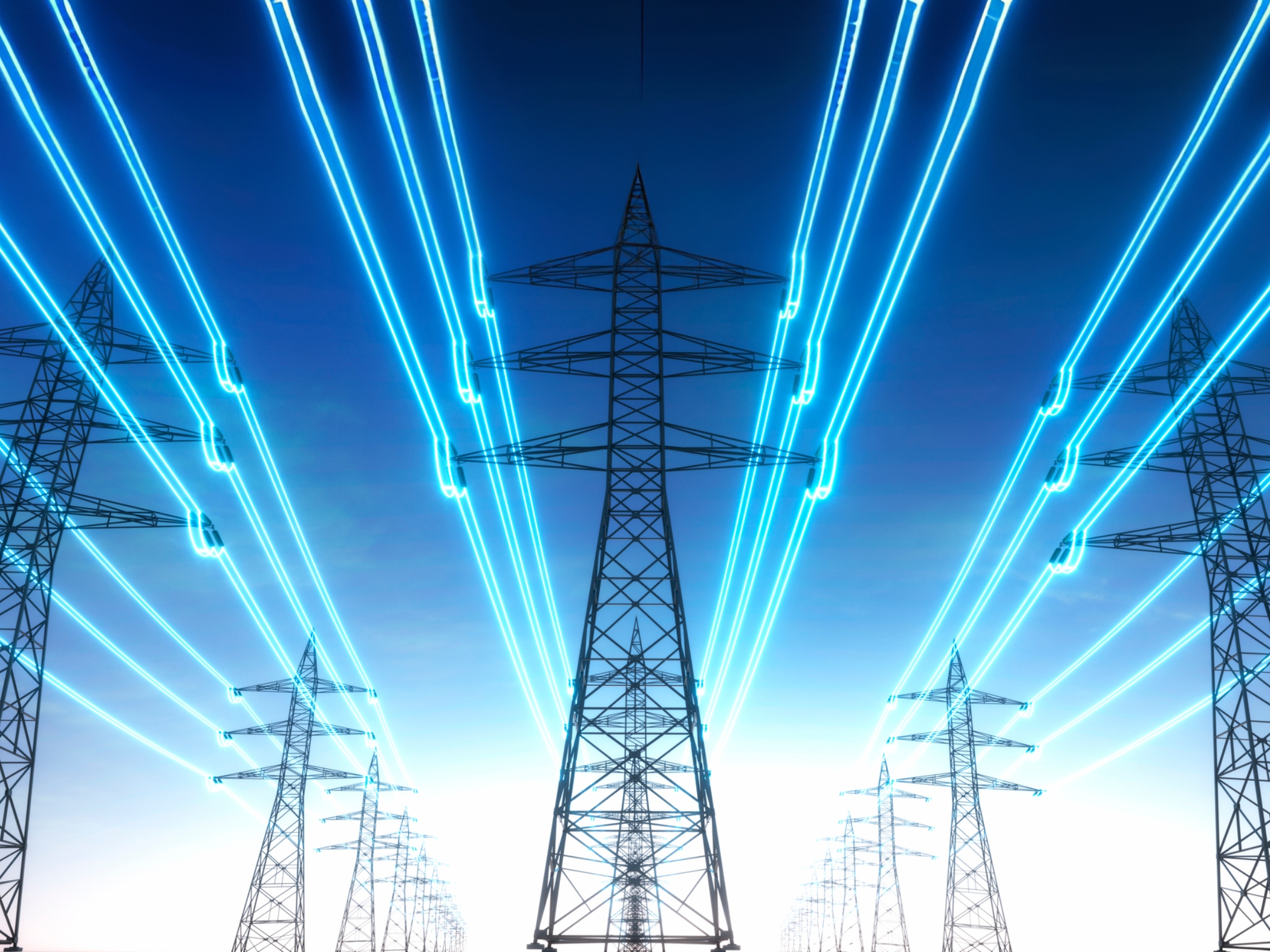
The U.S. grid has supplied dependable power for decades. However, today's grid faces a host of new challenges — from climate change to more complex power demands — that threaten power reliability and its capacity to meet power needs now and in the future.
Power outages alone can be very costly. The U.S. Department of Energy estimates that power outages cost the U.S. economy over $150 billion a year. Improving the efficiency and increasing the capacity of the grid is not only essential for reducing costly outages but also for meeting future demand.
Clearly, investing in the power grid is well worth the cost. Here, we'll highlight some of the challenges facing the grid and the advanced technologies being deployed to help meet those challenges.
Challenges facing the power grid
The modern grid is facing a number of difficult issues.
Aging infrastructure. Many transmission lines are decades old. Aging grid components and legacy control systems are inefficient, more prone to failure and may be unable to handle increased demand and advanced grid management technologies.
Increasing demand. The growing demand for electricity — driven by electric vehicles, data storage needs and other factors — is outpacing the growth in grid capacity.
Integration of renewable energy. The transition to renewable energy sources, which now represent more than 20% of total generation, presents challenges in grid stability and energy storage.
Cybersecurity threats. The grid is becoming increasingly vulnerable to hacking and other cyberattacks that can disrupt power supplies and compromise sensitive data.
Extreme weather. The increasing frequency and severity of storms, heatwaves and other extreme weather events can damage infrastructure and disrupt power supply.
Advanced technologies modernizing the grid
Multiple technologies are being developed and implemented to address the challenges facing the power grid and improve its reliability.
Advanced metering infrastructure provides real-time, two-way communication between utilities and customers, enabling better energy management, more accurate billing and enhanced demand response capabilities.
Grid-enhancing technologies (GETs), including advanced conductors, phase-shifting transformers and smart valves, help better manage the flow of electricity across the grid, improving efficiency and capacity.
Distributed energy sources, such as microgrids and virtual power plants, can be integrated into the main grid, increasing capacity and improving overall reliability.
Energy storage technologies like lithium-ion batteries and pumped hydro can help balance supply and demand, store excess renewable energy and provide backup power in potential blackout/brownout situations.
Artificial intelligence (AI) can use advanced data analytics to optimize grid operations by predicting demand and managing energy distribution. AI can also identify patterns and anomalies that may indicate potential issues, such as component failures or cyber threats, and take protective measures.
The cost of upgrading the grid
How much will it cost to modernize the grid in the coming years to face future challenges? Estimates vary, but they run into the trillions of dollars.
A 2023 report by IEEE Spectrum (a publication of the Institute of Electrical and Electronics Engineers) estimated that it would cost $2.5 trillion to modernize the grid by 2035 to support the growth of electric vehicles, integration of renewable energy sources and other factors. This investment would include improvements or replacements to thousands of generation units and substations, as well as hundreds of thousands of miles of transmission lines. In 2024, Rystad Energy research estimated that $3.1 trillion in grid infrastructure investments would be needed by 2030.
Whatever the cost, upgrading the grid is a smart investment to help ensure efficient and reliable power to support a healthy economy and a sustainable future.